

Looking for biblical guidance on mentorship and what it means to invest in the next generation with faithfulness and care? Scripture shows that mentorship is more than giving advice. It is one of the ways believers help one another grow in truth, character, and spiritual strength.
Contents
- 1 Introduction
- 2 Mentorship Begins with Stewardship
- 3 Christian Mentorship Needs Both Truth and Example
- 4 Mentorship Requires Patience
- 5 Mentorship Is an Expression of Love
- 6 The Goal Is Spiritual Maturity, Not Personal Duplication
- 7 Investing in the Next Generation Is Faithful Obedience
- 8 Simple Ways to Start Mentoring Others
- 9 Frequently Asked Questions: Mentorship as Ministry
- 10 Conclusion
- 11 Scripture References Used In This Article
Introduction
Mentorship is often viewed as something practical. People think of it as sharing wisdom, helping someone avoid mistakes, or guiding a younger person toward maturity. That is part of it. Wise guidance is a real gift. But in the Bible, mentorship is more than a useful habit. It is one of the ways believers care for one another and help pass truth from one generation to the next. The original draft already framed mentorship this way, especially in the introduction and early body sections.
This matters because the Christian life was never meant to be lived alone. New believers need instruction. Younger believers need examples they can trust. Even mature believers need encouragement to keep growing and to remember that what God teaches them is not meant to stay with them alone. That broader purpose is present throughout the original article.
When mentorship is understood biblically, it becomes a ministry of service. It is not about building personal influence or making people copies of ourselves. It is about helping others follow Christ more faithfully. It also requires humility, because no mentor can change a heart. Only God can do that. Still, He often uses faithful believers to teach, encourage, correct, and strengthen those who are coming behind them. That same emphasis appears in the draft’s opening and later sections on humility and spiritual maturity.
This article contains affiliate links. If you purchase through these links, JoyousBible may earn a commission at no additional cost to you. We only recommend resources that are relevant to biblical growth, Christian living, and faith-based study.
Mentorship Begins with Stewardship
A biblical view of mentorship begins with stewardship. If God has taught us through His Word, corrected us, and sustained us through many seasons, we are not meant to keep those lessons to ourselves. What we have received should be handled faithfully. That includes truth, wisdom, discernment, and the steady perspective that often comes through years of walking with God. This basic stewardship framework was one of the strongest parts of the original article.
Paul makes this clear in 2 Timothy 2:2. He tells Timothy to pass truth on to faithful people who will then teach others also. That pattern shows that spiritual investment is not accidental. Truth is meant to move from one life to another with care and faithfulness.
This also protects mentorship from pride. A mentor is not the source of truth, and he is not the master of another person’s life. He is a steward. He takes what God has entrusted to him and shares it in service to others. That keeps mentorship humble and serious. The draft made this point well, and it is worth preserving in simpler language.
In daily life, this may look very ordinary. It may mean explaining Scripture to a newer believer, answering sincere questions, praying with someone who is struggling, or helping a younger Christian think through a hard decision in a biblical way. Mature believers should ask not only, “Am I growing?” but also, “Am I helping anyone else grow?” The original draft moved toward this kind of application, and expanding it makes the teaching more useful.
Christian Mentorship Needs Both Truth and Example
Mentorship in Scripture is never only about words. Teaching matters, but example matters too. People need sound instruction, but they also need to see what that instruction looks like in daily life. The draft handled this balance between truth and example especially well.
Paul said, “Follow my example, as I follow the example of Christ” in 1 Corinthians 11:1. That was not self-promotion. It was a recognition that Christian teaching must take shape in real conduct. In the same way, Timothy was told to be an example in speech, conduct, love, faith, and purity. The article’s original wording on this section was solid and biblically aligned.
This does not mean a mentor must appear flawless. In fact, pretending to be above weakness can do real harm. Faithful mentorship has room for humility, repentance, and honesty. A mature believer should not model perfection. He should model what it looks like to take sin seriously, return to Christ quickly, and keep walking in obedience. That thought was clearly present in the source article and remains one of its strongest features.
Younger believers do not need a polished image. They need a faithful example. They need to see what it looks like to trust God, repent when wrong, stay grounded in Scripture, and keep moving forward in obedience.
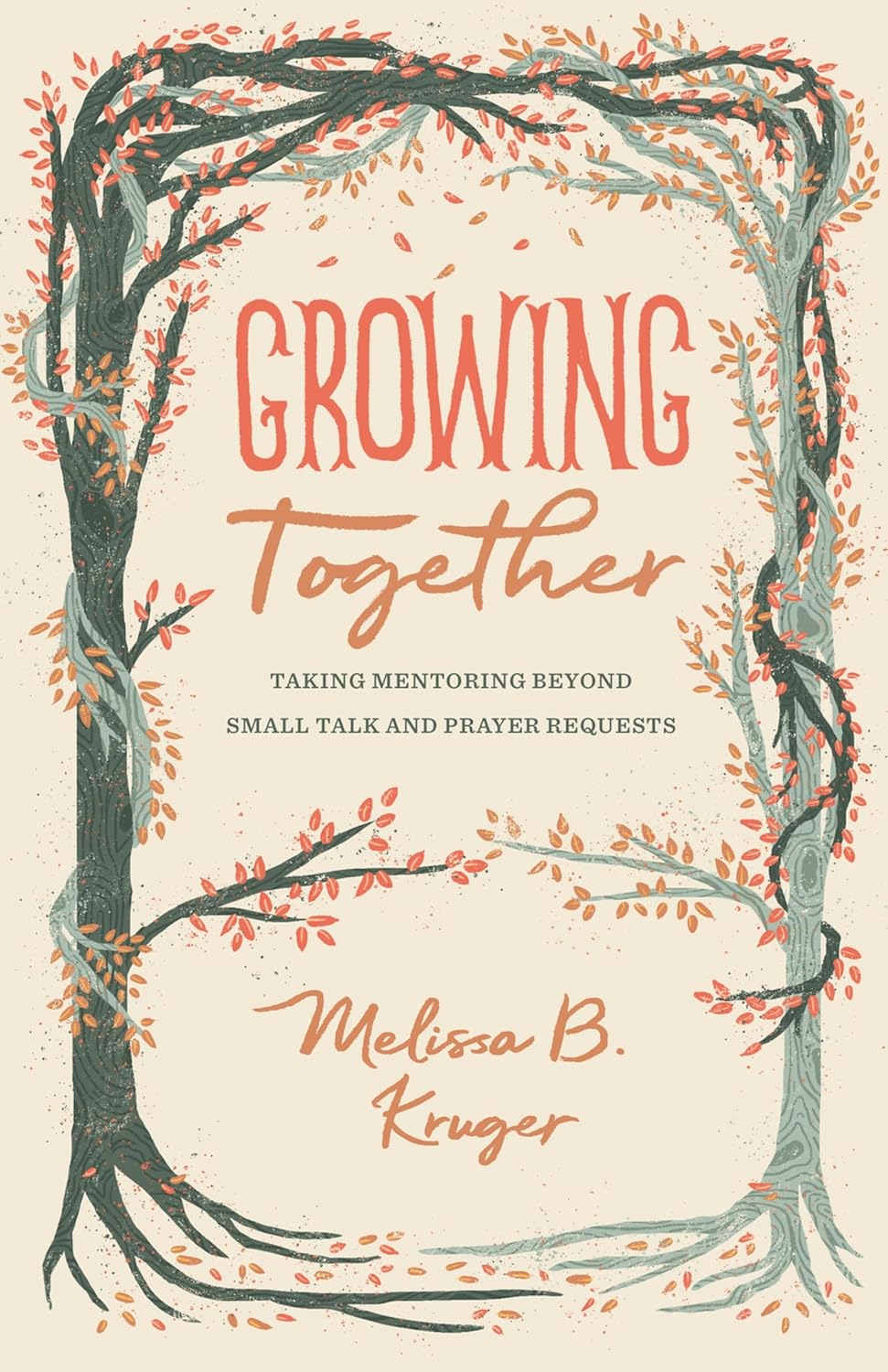
Growing Together: Taking Mentoring beyond Small Talk and Prayer Requests (The Gospel Coalition)
A Helpful Guide to Mentoring Relationships
“Melissa Kruger helps both the mentor and the mentee know where to start, what to cover, and how to make it work so that the mentoring relationship is a source of joy and growth for everyone involved.”
―Nancy Guthrie, Bible teacher; author, Even Better than Eden: Nine Ways the Bible’s Story Changes Everything about Your Story
Check Current Price and Availability at Amazon.
Mentorship Requires Patience
One of the easiest mistakes in mentoring is expecting quick results. We often want people to understand truth right away and apply it without struggle. But spiritual growth usually takes time. People learn in stages. They may need the same correction more than once. They may know what is right and still need time to grow stronger in doing it. This pacing and growth language was a major part of the original patience section.
That is why patience is so important. Scripture calls believers to teach and correct with patience. In mentoring, that means staying steady when growth is slow. A younger believer may need repeated encouragement. A struggling believer may need careful correction over time. If mentorship loses patience, it often becomes harsh, anxious, or controlling. The original draft expressed this clearly and practically.
Patience does not mean avoiding hard truths. Love sometimes requires warning, correction, and clarity. But patience changes the spirit in which those things are done. A mentor can explain, urge, pray, and remain present, but he cannot force maturity into being. Only God gives growth. The original text tied this point to 1 Corinthians 3:6–7, and that is a strong biblical frame.
This kind of patience also protects the mentor. If a person begins to think someone else’s growth depends mainly on his own effort, he will likely become either proud or discouraged. Patience helps him remember his limits. He is called to faithfulness, not control.
Mentorship Is an Expression of Love
The Bible speaks of the church as a household, not just a crowd. Believers belong to one another in Christ, and that shared life includes real responsibility. Mentorship is one of the ways that care takes shape. The original draft’s church-love section reflected this well.
Titus 2 gives a clear example. Older women are told to teach younger women what is good. The point is not simply age. It is mature believers helping others live in a godly way. The passage connects spiritual instruction to daily life, including self-control, faithfulness, dignity, and sound speech. The source article used Titus 2 appropriately and tied it to ordinary Christian living.
That helps us understand what mentorship really is. It is not detached advice. It is loving guidance that helps people obey God in daily life. It may happen through conversation, prayer, Bible reading, correction, encouragement, or quiet consistency over time.
Love keeps this ministry from becoming cold or mechanical. A person can give advice without really caring. He can correct without tenderness. But Christian mentorship should reflect the heart of Christ. It should be serious without being severe, and honest without being cruel. This same steady tone is one of the strongest qualities of the original draft and also matches the Joyous Bible review standard.
The Goal Is Spiritual Maturity, Not Personal Duplication
A common danger in mentorship is trying to make other people become like us in every way. That can happen openly or quietly. A person may begin with good intentions but slowly start treating his own preferences, habits, and judgments as the measure of maturity. The original article identified this danger clearly.
Biblical mentorship aims at something better. The goal is spiritual maturity. Colossians 1:28 shows that the aim is to present people mature in Christ. A faithful mentor wants the person he is helping to grow in truth, wisdom, and obedience before God. He does not want to create a personal copy of himself. That central idea was already strong in the source text.
This means leaving room for differences. Not every believer will have the same temperament, gifting, pace of growth, or calling. Good mentorship does not demand sameness in every detail. It helps people become more rooted in Christ.
This is why humility matters again. Christ is the true Shepherd and Teacher. Human mentors are only helpers. Their task is to point people toward the Lord, not attach people to themselves. The draft’s use of John 3:30 here was fitting and helpful.
Investing in the Next Generation Is Faithful Obedience
The Bible regularly shows one generation teaching the next. God’s works, words, and ways were not meant to be forgotten. Psalm 78:4–7 shows the importance of telling the next generation what God has done. The original article used this passage to widen mentorship beyond private advice and into ongoing faithfulness across generations.
That truth reaches beyond the home and into the wider life of the church. The next generation needs more than concern, admiration, or criticism. It needs faithful investment. That may include teaching Scripture, answering questions, correcting error, encouraging endurance, or showing what steady Christian living looks like over time. This practical expansion builds directly on the draft’s wording.
This kind of investment does not require someone to be famous, highly trained, or in visible ministry. It begins with ordinary faithfulness. A believer may meet with someone for prayer, explain a passage of Scripture, check in on a younger Christian, or offer wise encouragement during a difficult season. The original draft moved in this direction, and spelling it out makes the article more useful for the average reader.
In a time when many people are spiritually unsteady, this matters deeply. Confusion is common. Isolation is common. Discouragement is common. Mature believers should care whether those coming behind them are being strengthened in truth and love. That concern appears clearly in the closing sections of the source article.
Simple Ways to Start Mentoring Others
For many Christians, the idea of mentorship sounds important but a little unclear. The good news is that it often begins in simple ways.
You may start by praying regularly for a younger believer. You may invite someone to read Scripture with you. You may take a few minutes after church to answer sincere questions or encourage someone who is struggling. You may check in with a newer believer during the week. You may share what God has taught you in a humble and careful way.
Not every mentoring relationship has to be formal. Sometimes mentorship grows slowly through ordinary faithfulness. The point is not to create a program in every case. The point is to be available, truthful, and loving.
Frequently Asked Questions: Mentorship as Ministry
What does it mean to treat mentorship as a ministry?
It means seeing mentorship as an act of Christian service rather than just informal advice or leadership development. It includes truth, encouragement, example, patience, and care. Viewing it as a ministry shifts the focus from professional networking to spiritual stewardship.
Is mentorship only for pastors or church leaders?
No. While some forms of mentoring happen through formal leadership, the Bible shows a wider pattern of mature believers helping others grow. Titus 2 provides a clear example of this organic, congregational pattern of life-on-life investment.
Does a mentor need to have all the answers?
No. A faithful mentor should be grounded in Scripture, honest about his limits, and willing to point others back to God’s Word. Humility is a vital part of faithful mentorship; admitting you don’t know something can actually model healthy spiritual reliance to a mentee.
How do you mentor someone without becoming controlling?
A mentor must remember that his role is to serve, not rule. He can speak truth and offer guidance, but he cannot take God’s place in another person’s life. Healthy mentorship helps people grow in their walk with Christ, not in their dependence on the mentor.
Why is patience so important in mentoring?
Patience matters because spiritual growth is rarely linear and usually takes time. People often need repeated instruction, encouragement, and correction as they learn to follow Christ more steadily. A patient mentor provides the safe environment necessary for that slow growth to occur.
Conclusion
Mentorship is not a small part of Christian life. It is one of the ordinary ways believers love one another and help truth endure from one generation to the next. It grows out of stewardship, takes shape through example, and requires patience, humility, and care. The source article’s conclusion already carried this theme well.
It is not about status, control, or building a personal following. It is about serving others so they become more rooted in Christ.
Investing in the next generation does not always look dramatic. Often, it looks like steady faithfulness, honest teaching, patient correction, prayer, and loving presence. Done in that spirit, mentorship becomes a quiet but meaningful ministry, and one that the church should never treat lightly.
Scripture References Used In This Article
Below is a table of verses used in developing this article. I encourage you to review each one and contemplate what the bible says regarding the principles identified as it relates to mentoring the next generation.
| Principle | Key Scripture (WEB) | Marketplace Application |
|---|---|---|
| Multiplication | 2 Timothy 2:2 – “The things which you have heard from me among many witnesses, commit the same to faithful men, who will be able to teach others also.” | Develop a leadership pipeline; your success is measured by how well you equip your successors. |
| Imitation | 1 Corinthians 11:1 – “Be imitators of me, even as I also am of Christ.” | Model the work ethic and integrity you wish to see in your team; lead by example first. |
| Influential Example | 1 Timothy 4:12 – “Let no man despise your youth; but be an example to those who believe, in word, in your way of life, in love, in spirit, in faith, and in purity.” | Your age or tenure matters less than your conduct; earn respect through consistent excellence and character. |
| Readiness | 2 Timothy 4:2 – “Preach the word; be urgent in season and out of season; reprove, rebuke, and exhort, with all patience and teaching.” | Be prepared to provide guidance or corrections at any time, maintaining a posture of mentorship through all business cycles. |
| Growth Sources | 1 Corinthians 3:6-7 – “I planted. Apollos watered. But God gave the increase. So then neither he who plants is anything, nor he who waters, but God who gives the increase.” | Do your part in training and networking, but trust God for the actual scaling and results of the business. |
| Mentoring Wisdom | Titus 2:3-5 – “…that they may train the young women… to be sober and to love their husbands… that the word of God may not be blasphemed.” | Cross-generational mentorship is vital; seasoned professionals should actively guide those newer to the industry. |
| Shared Life | 1 Thessalonians 2:7-8 – “…we were well pleased to impart to you, not the Good News of God only, but also our own souls, because you had become very dear to us.” | True mentorship involves more than just skill transfer; it requires genuine care and relational investment in your team. |
| Maturity | Colossians 1:28 – “…admonishing every man and teaching every man in all wisdom, that we may present every man perfect in Christ Jesus.” | Goal-setting should include the personal and professional maturity of those you lead, aiming for total excellence. |
| Humility | John 3:30 – “He must increase, but I must decrease.” | Celebrate the growth of your mentees even when they surpass you; a great leader is happy to see others take the spotlight. |
| Legacy Education | Psalm 78:4-7 – “…telling to the generation to come the praises of Yahweh… so that they might set their hope in God.” | Document your values and “why” so that the core mission of the company survives through future leadership changes. |
| Consultation | James 1:5 – “But if any of you lacks wisdom, let him ask of God, who gives to all liberally and without reproach; and it will be given to him.” | Never mentor out of your own strength alone; seek divine wisdom for the specific advice your team needs. |
If you have enjoyed this post, perhaps you would like one of our other Posts.